

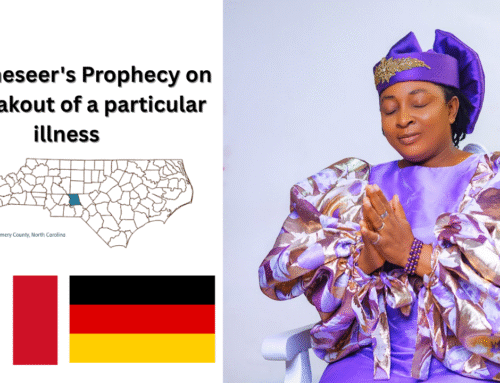
In a recent Instagram message for the global agriculture outlook, spiritual commentator Bright the Seer shared reflections about the direction of the world over the next few years. Her message touches on themes that resonate far beyond spirituality—agriculture, global stability, and the future of international cooperation.
While prophetic messages are often symbolic, the ideas raised mirror real conversations happening today about food security, geopolitical tension, and the changing balance of global economies. As the world moves closer to 2027, many observers are asking the same question: what kind of future is unfolding for nations, farmers, and global institutions?
When One Nation Rises, Another May Struggle
Bright begins his message with a well-known observation about the rhythm of history: when one rises, another falls. The idea reflects a pattern seen repeatedly in global economics and politics.
Periods of instability in some countries often create unexpected opportunities elsewhere. When supply chains shift or economies slow down in certain regions, others step in to fill the gap. Over time, this constant rebalancing reshapes the global landscape.
The message suggests that similar shifts could occur in the coming years. Some nations may experience unrest or uncertainty, while others could find themselves entering a season of growth.
A Strong Season Ahead for Agriculture
One of the central themes in Bright’s message is agriculture. According to the spiritual insight he shared, farming and agricultural activity could see noticeable improvement this year and beyond.
Importantly, the message does not limit this growth to a single continent. Instead, it suggests that progress in agriculture may take place across multiple regions of the world.
That idea aligns with trends already visible in global farming. Governments and private investors have been increasing funding for agriculture as food demand continues to grow. New technologies—from precision irrigation to satellite crop monitoring—are also helping farmers improve productivity.
Population growth, climate adaptation, and rising food consumption are pushing agriculture to become one of the most strategic industries of the decade. If the sector continues expanding, it could play a major role in stabilizing economies that face other challenges.
The Hidden Threat Facing Farmers
Despite the hopeful outlook for agriculture, Bright’s message also includes a warning. He highlights the need for prayer and vigilance against individuals or groups who harass people in their homes and on their farms.
In many parts of the world, rural insecurity has become a serious issue. When farmers feel unsafe, they may abandon farmland or reduce production. The consequences ripple through the entire food system.
A single disruption in farming communities can lead to shortages, rising prices, and pressure on national food supplies. Protecting rural populations, therefore, becomes more than a security matter—it becomes a food security issue as well.
For agriculture to truly thrive, farmers must be able to work their land without fear.
Pressure on Global Institutions
Another part of the message points toward international organizations such as the United Nations and other global institutions. The concern raised is that these systems could face pressure or instability if emerging problems are not handled carefully.
In recent years, global organizations have been navigating increasingly complex challenges. Climate change, migration, regional conflicts, and food shortages all require coordinated international responses.
When cooperation between nations weakens, it becomes harder for institutions to maintain stability. The message implies that careful leadership and responsible governance will be essential as the world approaches the later years of this decade.
A Period of Unfolding Events
Toward the end of the message, Bright notes that many dramatic developments could unfold as the world moves toward 2027. While the details remain unclear, the broader theme suggests that humanity may be entering a period of significant transition.
History shows that times of global change often bring both risk and opportunity. New industries emerge, old systems evolve, and nations reposition themselves in response to shifting realities.
Agriculture, food production, and rural development may ultimately become some of the most important pillars of stability during this period.
Looking Ahead
The reflections shared by Bright the Seer combine caution with hope. On one hand, the message warns about unrest, security challenges, and pressure on global institutions. On the other, it points to encouraging possibilities for agriculture and food production worldwide.
For farmers, policymakers, and investors, the takeaway is clear. Strengthening agricultural systems, protecting rural communities, and encouraging international cooperation will be critical in the years ahead.
Whether viewed through a spiritual lens or a practical one, the message serves as a reminder that the future of the world may depend heavily on how well nations protect the people who feed it.
As the years move closer to 2027, one thing seems certain: agriculture will remain at the heart of global stability.





Leave A Comment